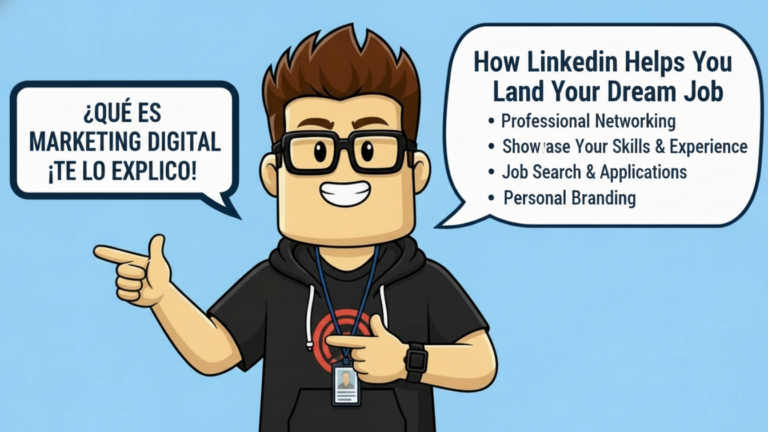
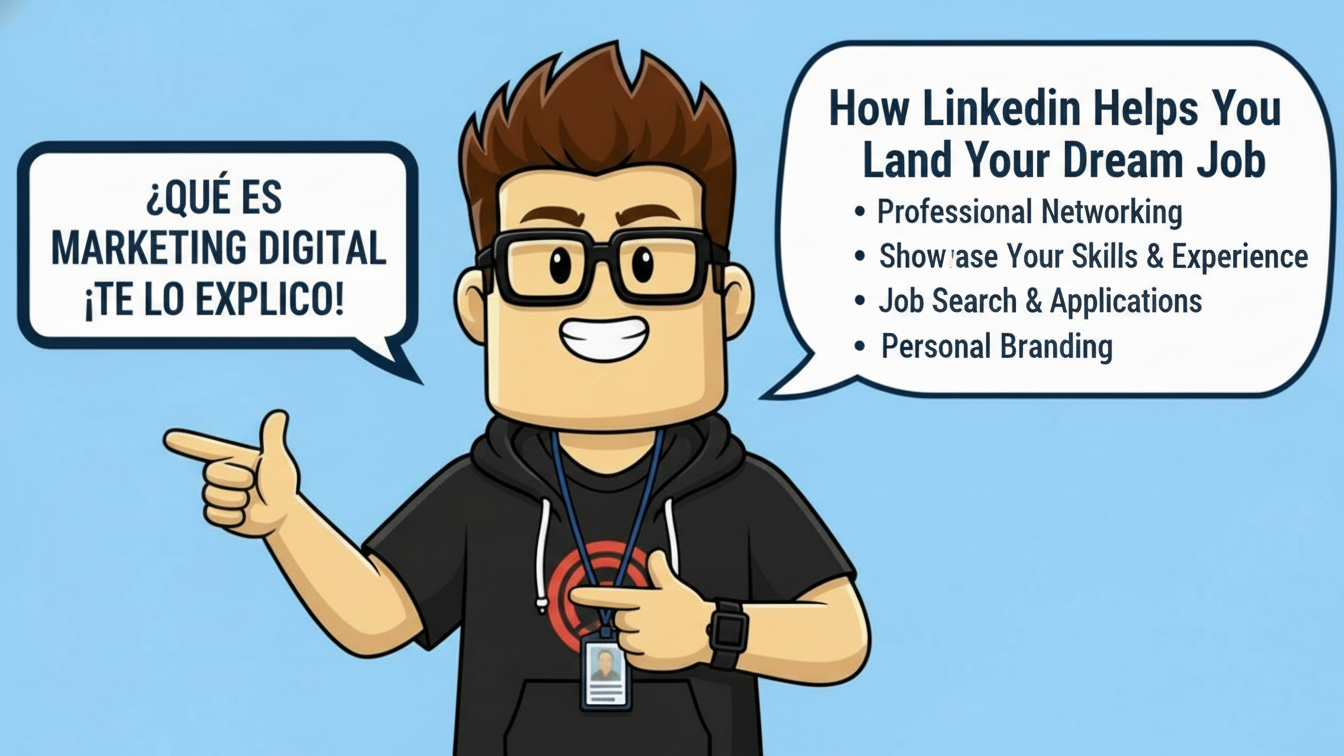
How LinkedIn Helps You Land Your Dream Job: A Proven Strategy Guide
Can LinkedIn really help you get a new job, or is it just another social media platform consuming your time? The short answer: yes, but only if you use it strategically. While many professionals maintain passive LinkedIn profiles that generate zero opportunities, others leverage the platform to unlock career-changing positions and business opportunities. In this comprehensive guide, I’ll share proven strategies from real success stories—including how an 18-year-old with minimal experience landed a corporate position through strategic profile optimization. You’ll discover the exact elements that make LinkedIn profiles irresistible to recruiters, how to implement Social Selling techniques, and why your first three seconds on the platform determine your success.
Understanding LinkedIn’s Job Search Potential
Beyond Traditional Job Boards
LinkedIn has fundamentally transformed how professionals connect with opportunities. Unlike traditional job boards where you compete against hundreds of anonymous applicants, LinkedIn allows you to:
- Build visibility before opportunities even arise
- Network directly with hiring managers and decision-makers
- Showcase your expertise through content and engagement
- Get discovered passively by recruiters searching for specific skills
- Access the hidden job market where positions are filled through connections
The platform serves dual purposes: active job searching and passive opportunity attraction. The most successful LinkedIn users master both approaches.
Real Results: When Strategic LinkedIn Use Works
LinkedIn’s effectiveness isn’t theoretical—it produces tangible results for professionals across industries and experience levels. Success stories range from:
- Career changers transitioning into entirely new sectors
- Young professionals securing first corporate positions
- Experienced executives negotiating favorable exit packages
- Entrepreneurs generating consistent business opportunities
- Mid-career professionals escaping stagnant positions
The common thread? Strategic profile optimization combined with consistent engagement.
The Social Selling Approach: Beyond Job Hunting
What Social Selling Means for Your Career
While many people view LinkedIn purely as a job search tool, the Social Selling methodology offers broader career benefits. Social Selling involves:
Building authentic relationships rather than transactional connections Providing value consistently through insights and expertise sharing Positioning yourself as an industry authority before opportunities arise Creating inbound interest so opportunities come to you
This approach requires time investment—often significant time—but delivers compound returns. Professionals implementing Social Selling strategies report:
- Multiple unsolicited job offers annually
- Speaking and consulting opportunities
- Stronger negotiating positions when opportunities arise
- Professional security independent of current employment
The Time Investment Reality
Successful LinkedIn presence isn’t passive. Effective Social Selling typically requires:
- Daily engagement: 20-30 minutes commenting, sharing insights
- Weekly content creation: Publishing articles or posts showcasing expertise
- Strategic networking: Personalized connection requests and relationship building
- Profile optimization: Regular updates reflecting skills evolution
This investment pays dividends, but requires commitment. Many professionals abandon LinkedIn because they expect immediate results without consistent effort.
The Mario Success Story: Turning Enthusiasm into Employment
An 18-Year-Old’s Job Search Strategy
Mario’s story illustrates how strategic profile design overcomes experience limitations. At 18, facing the job market without university credentials or substantial work history, he had one undeniable strength: natural sales ability and genuine enthusiasm.
His challenge:
- Minimal professional experience
- No higher education credentials
- Limited portfolio of achievements
- Competing against experienced candidates
The strategic solution: Rather than hiding these limitations, Mario’s profile addressed them directly while emphasizing transferable strengths.
The Three Critical Profile Elements That Worked
1. A Compelling Headline
Most young professionals waste their headline with generic statements like “Recent Graduate” or “Seeking Opportunities.” Mario’s headline immediately communicated value and personality, signaling what he brought to potential employers rather than what he hoped to gain.
2. An Authentic, Direct “About” Section
The About section showcased:
- Honest acknowledgment of his experience level
- Genuine enthusiasm that radiated from every sentence
- Clear value proposition focused on sales capabilities
- Personality that differentiated him from cookie-cutter applicants
This sincerity resonated with recruiters tired of inflated credentials and generic corporate speak.
3. Strategic Keywords
Mario’s profile incorporated high-value keywords:
- “Sales”
- “Commercial Management”
- “Business Development”
- Related terminology recruiters actively search
These keywords ensured his profile appeared when companies searched for entry-level sales talent, dramatically increasing visibility.
The Results: Multiple Opportunities
Mario’s optimized profile generated:
- Calls from several companies actively recruiting
- Interview opportunities across different sectors
- Final placement with Education First, an international education company
This success demonstrates that even with limited experience, strategic LinkedIn positioning creates opportunities that traditional application methods never would.
The “Perceived Strength” Principle: Your 3-Second Window
Why First Impressions Dominate LinkedIn Success
Here’s a fundamental truth about human psychology: people form impressions in three seconds or less. On LinkedIn, this means your visual presentation and immediate profile elements determine whether someone investigates further or scrolls past.
The principle: “Perceived strength is transmitted strength.”
When your profile projects confidence, competence, and clarity instantly, viewers unconsciously attribute these qualities to you professionally. Conversely, amateur or neglected profiles signal lack of professionalism regardless of your actual capabilities.
Optimizing Your Visual First Impression
Profile Photo Essentials:
Your profile photo isn’t vanity—it’s your most important professional asset on LinkedIn. Effective profile photos:
- Professional quality: Clear, well-lit, properly framed
- Appropriate attire: Match your industry’s professional standards
- Genuine expression: Approachable but professional demeanor
- Current appearance: Updated within the past two years
- Proper framing: Head and shoulders, facing camera directly
Cover Photo Strategy:
Your cover photo occupies prime visual real estate. Use it strategically to:
- Reinforce your professional brand with industry-relevant imagery
- Showcase credentials like speaking engagements or publications
- Create visual interest that complements rather than competes with your profile photo
- Display personality appropriate to your industry culture
Together, these visual elements create the critical first impression that determines whether someone reads further.
Building a 100% Prepared LinkedIn Profile
The Complete Optimization Checklist
A fully optimized LinkedIn profile requires attention to multiple elements working in concert:
Headline Optimization (120 characters maximum):
Your headline appears everywhere—search results, comments, connection requests. Make it count by:
- Leading with value, not job titles
- Including searchable keywords relevant to target roles
- Showcasing specialization that differentiates you
- Avoiding generic descriptions that blend into the crowd
Example transformation:
- Weak: “Marketing Professional | MBA Graduate”
- Strong: “Digital Marketing Strategist | B2B Lead Generation Specialist | Content Marketing”
About Section Mastery:
This 2,600-character space is your opportunity to tell your professional story compellingly. Effective About sections:
- Open with a hook that captures attention immediately
- Tell your story in first-person for authenticity
- Highlight achievements with specific, quantifiable results
- Address reader needs by explaining how you solve problems
- Include strategic keywords naturally throughout
- End with a clear call-to-action inviting connection or conversation
Experience Section Strategy:
Don’t simply list job duties. Transform your experience by:
- Leading with accomplishments rather than responsibilities
- Quantifying results whenever possible (percentages, dollar amounts, time savings)
- Using action verbs that convey impact and initiative
- Including relevant keywords for search optimization
- Telling mini-stories that demonstrate problem-solving capabilities
Skills Section Tactics:
LinkedIn’s algorithm heavily weighs skills for search results. Optimize by:
- Prioritizing your top 3 skills (these appear prominently)
- Including 30+ relevant skills for maximum searchability
- Requesting endorsements from colleagues and clients
- Regularly updating as you develop new capabilities
Recommendations Power:
Written recommendations provide social proof that validates your profile claims. Secure them by:
- Requesting strategically from managers, clients, and colleagues
- Offering to reciprocate (LinkedIn operates on reciprocity)
- Providing guidance on what aspects to highlight
- Displaying prominently on your profile
The Search Ranking Component
Profile completeness directly impacts search visibility. LinkedIn’s algorithm favors profiles that:
- Approach 100% completion across all sections
- Receive regular engagement through comments, shares, and profile views
- Include rich media like presentations, articles, and portfolio pieces
- Maintain activity through posts, comments, and updates
- Generate keywords matches for specific search queries
Incomplete profiles rarely appear in recruiter searches regardless of qualifications.
Active vs. Passive Job Search Strategies
The Active Approach: When You’re Urgently Seeking
When actively job hunting, implement these tactics:
1. Set Your Status: LinkedIn’s “Open to Work” feature signals recruiters you’re available. Use it strategically:
- Visible to all when unemployed or not concerned about current employer
- Recruiter-only visibility when currently employed and seeking discretely
2. Daily Search and Application:
- Use advanced search to find relevant positions
- Apply quickly to new postings (first applicants get disproportionate attention)
- Customize applications rather than using generic submissions
- Track applications systematically for follow-up
3. Direct Outreach:
- Connect with hiring managers before or after applying
- Send personalized messages explaining your interest and fit
- Request informational interviews to learn about companies and roles
- Follow up professionally without being pushy
The Passive Approach: Building Long-Term Opportunities
Even when not actively searching, maintain LinkedIn presence to attract opportunities:
Content Strategy:
- Share valuable insights relevant to your industry
- Comment thoughtfully on others’ posts
- Publish articles demonstrating expertise
- Engage consistently to remain visible in your network’s feeds
Network Expansion:
- Connect strategically with industry peers, potential mentors, and thought leaders
- Join relevant groups and participate actively
- Attend virtual events and connect with participants
- Nurture relationships beyond transactional requests
Thought Leadership:
- Establish expertise in specific niches within your field
- Share case studies and success stories (with permission)
- Offer solutions to common industry challenges
- Build credibility that makes you a recruiter magnet
Common LinkedIn Job Search Mistakes
Pitfall 1: The Set-and-Forget Profile
Creating a profile then abandoning it wastes LinkedIn’s potential. Profiles require:
- Regular updates reflecting new skills and achievements
- Consistent activity to maintain algorithm visibility
- Ongoing optimization based on what generates engagement
Pitfall 2: Generic Connection Requests
Mass connection requests without personalization receive low acceptance rates. Instead:
- Reference common connections or shared interests
- Explain why you’re connecting briefly but specifically
- Offer value rather than immediately asking for favors
Pitfall 3: Underestimating Visual Elements
Poor quality photos or neglected visual branding severely handicap your profile regardless of credentials. Invest in professional photography and thoughtful design.
Pitfall 4: Keyword Neglect
Without strategic keywords, your profile won’t appear in relevant searches. Research common search terms in your industry and incorporate them naturally.
Pitfall 5: Inconsistent Activity
Sporadic LinkedIn engagement confuses the algorithm and limits reach. Consistent daily activity, even just 15 minutes, dramatically outperforms occasional bursts.
Timeline Expectations: Short-Term vs. Medium-Term Success
Understanding Realistic Timeframes
LinkedIn job search success varies based on multiple factors:
Short-term results (1-3 months):
- Optimized profiles with in-demand skills
- Active job markets in your industry
- Willingness to relocate or work remotely
- Strong networking and daily engagement
Medium-term results (3-6 months):
- Competitive industries or specialized roles
- Geographic limitations
- Career transitions or industry changes
- Building reputation and thought leadership
Long-term investment (6+ months):
- Establishing authority in your field
- Building substantial network
- Creating consistent content presence
- Developing Social Selling relationships
Patience combined with consistent effort yields the best results. Many successful job seekers report that opportunities accelerated significantly after the 3-month mark once their activity established momentum.
Special Situations: LinkedIn Strategies for Different Scenarios
Career Changers
When transitioning industries:
- Emphasize transferable skills over industry-specific experience
- Highlight relevant projects even if outside primary role
- Seek informational interviews to understand new industry language
- Take courses and add certifications to build credibility
- Volunteer or freelance in target industry to build relevant experience
Recent Graduates
With limited experience:
- Focus on academic achievements and relevant projects
- Highlight internships and extracurricular leadership
- Emphasize enthusiasm and willingness to learn
- Showcase soft skills employers value
- Connect with alumni working in target companies
Senior Executives
At executive levels:
- Focus on strategic impact and business results
- Quantify achievements with revenue, growth, or efficiency metrics
- Build thought leadership through published content
- Network strategically with board members and C-suite peers
- Consider executive branding support for profile optimization
Negotiating Exit Packages
LinkedIn becomes valuable leverage when:
- Demonstrating market value through recruiter interest
- Showing alternative opportunities during negotiations
- Maintaining professional reputation during transitions
- Networking for references and recommendations
Measuring Your LinkedIn Success
Key Performance Indicators
Track these metrics to evaluate your LinkedIn strategy:
Profile Metrics:
- Profile views (increasing visibility)
- Search appearances (keyword optimization effectiveness)
- Connection growth (network expansion)
- Engagement rates on your posts
Opportunity Metrics:
- InMail messages from recruiters
- Connection requests from relevant professionals
- Interview invitations generated
- Job offers received
Long-term Metrics:
- Network quality (connections in target companies/roles)
- Content reach and engagement trends
- Thought leadership recognition (speaking invitations, media requests)
Analyze monthly to identify what’s working and adjust strategy accordingly.
Conclusion: Your LinkedIn Success Starts Today
LinkedIn’s power to transform careers is undeniable—when used strategically. Whether you’re an 18-year-old entering the workforce like Mario or an experienced professional seeking new challenges, the platform offers unprecedented access to opportunities that traditional job search methods cannot match.
The essential elements for LinkedIn job search success:
- 100% optimized profile that captures attention in three seconds
- Strategic keywords ensuring recruiters find you
- Authentic About section showcasing genuine enthusiasm and value
- Professional visual branding projecting confidence and competence
- Consistent engagement building visibility and relationships
- Patient persistence understanding results compound over time
Remember the “perceived strength is transmitted strength” principle. Your LinkedIn profile is often the first—and sometimes only—impression potential employers form. Make it count.
The difference between LinkedIn users who land dream jobs and those who see no results isn’t luck or connections—it’s strategic optimization combined with consistent implementation. Start today by auditing your profile against the checklist in this guide, identifying your three weakest elements, and committing to improvement.
What’s holding your LinkedIn profile back from generating opportunities? Identify that barrier and address it this week. Your next career opportunity might be just one profile optimization away from finding you.
About the Author